Blog / Moped Accidents

Moped Driving Laws You Might Not Know About

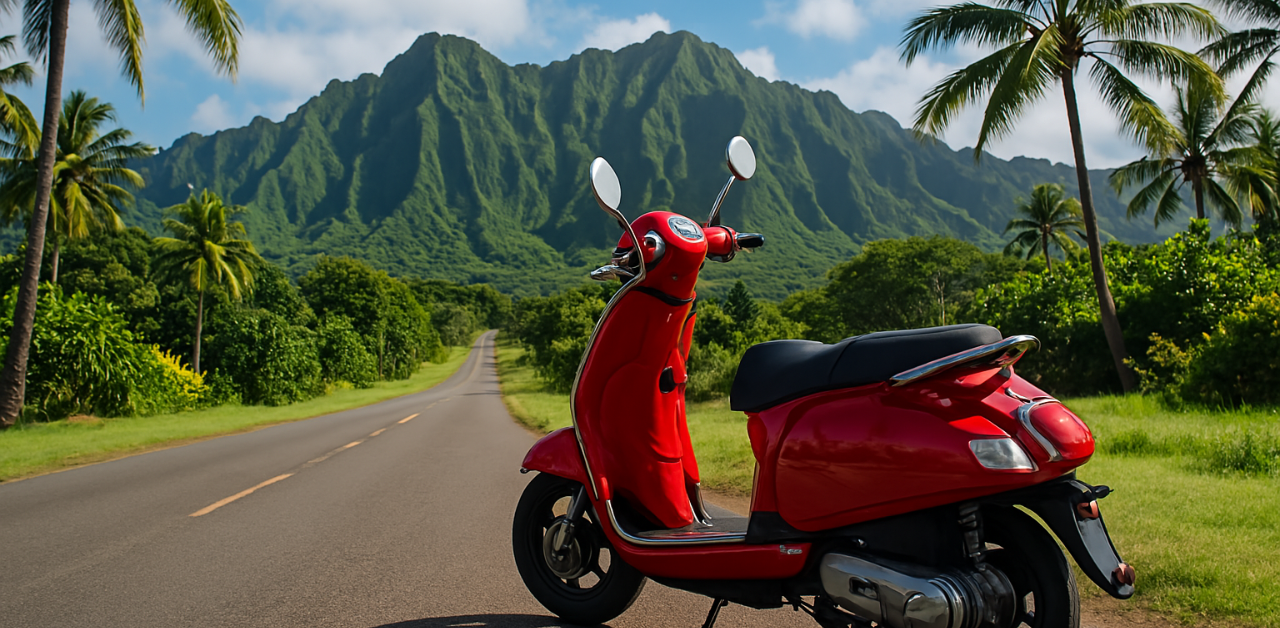
Red scooter parked roadside with lush tropical mountains and palm trees in the background
Mopeds easily move through Honolulu traffic and slip into tight on‑street parking stalls. They cost less to run than a car and feel almost like a bicycle. Still, a moped is a motor-driven cycle under state law, and moped drivers must follow many of the same traffic laws that apply to any motor vehicle. Failing to obey moped laws can bring fines—or worse, a life‑changing injury.If you were hurt while riding, talk with the seasoned moped accident attorney at Recovery Law Center. A quick call lets you schedule a no‑obligation consultation and learn your rights.

What Hawaii Calls a “Moped”

Under HRS § 286‑2, a moped is a two‑wheeled vehicle (or three wheels in rare cases) that:
  • Uses an automatic transmission (also called an automatic power drive system)
  • Has a motor no larger than 50 cc or 2 horsepower, or an electric motor of equal output
  • Cannot exceed 30 mph normal speed on level ground
  • Carries no more than one person on two‑wheel models
A machine that goes faster or shifts gears is a motor scooter or motorcycle and must meet different licensing laws.

Valid Motorcycle License

  • Driver’s license required: Any valid driver’s license (Class 3) lets you legally ride a moped.
  • Moped‑only option: Moped riders who do not drive cars can apply for a moped license (Class 1, similar to a “class MD license” on the mainland).
  • Under 18: Teen moped riders must meet driver education requirements, hold a motorcycle instruction permit, and log practice time before the road test.
  • Upgrading later: A motorcycle endorsement or full motorcycle license is needed if you move up to a larger bike.

Registration, Plates, and Safety Check

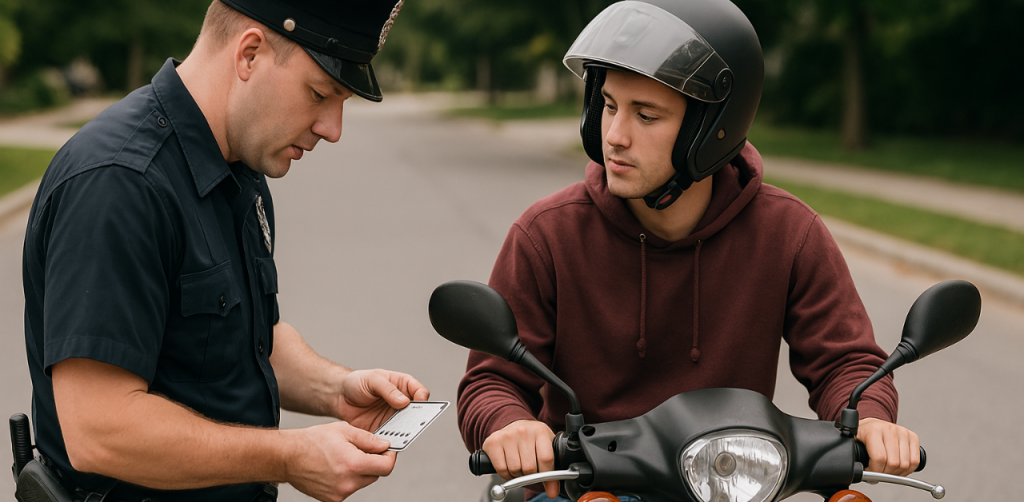
Police officer checks ID of young man wearing helmet and maroon hoodie while seated on a scooterAll moped owners must:
  • Pay a modest registration fee at the county finance office
  • Attach a rear license plate (size is smaller than the car plates)
  • Pass a yearly safety inspection that checks brakes, lights, and other rider safety equipment.
Keep the certificate on the bike or in your pocket when you ride.

You Might Need to Carry Liability Insurance

Hawaii still exempts privately owned mopeds from the statewide rule that makes motorcycle owners purchase liability insurance. Yet two situations flip the rule:
  1. Rental or lease mopeds – The business must carry liability insurance that covers third‑party injury and property damage.
  2. Three‑wheeled mopeds – Operators must also carry liability insurance similar to motorcycles.
Even when not required, many riders buy a low‑cost policy to protect themselves if they injure someone or hit a fixed or moving object.

Required Safety Gear

Hawaii’s helmet laws say riders under 18 must wear a helmet that meets DOT standards. Adults may ride without one, but police and doctors urge every motorcycle rider to use an approved helmet. Your moped must also have:
  • Headlight, tail light, brake light, and reflectors
  • A rear‑view mirror
  • A muffler that prevents excessive or unusual noise
  • Functional brakes on both wheels
Three‑wheel mopeds with a cab must include a seat belt assembly or child restraint system.

Parking Rules

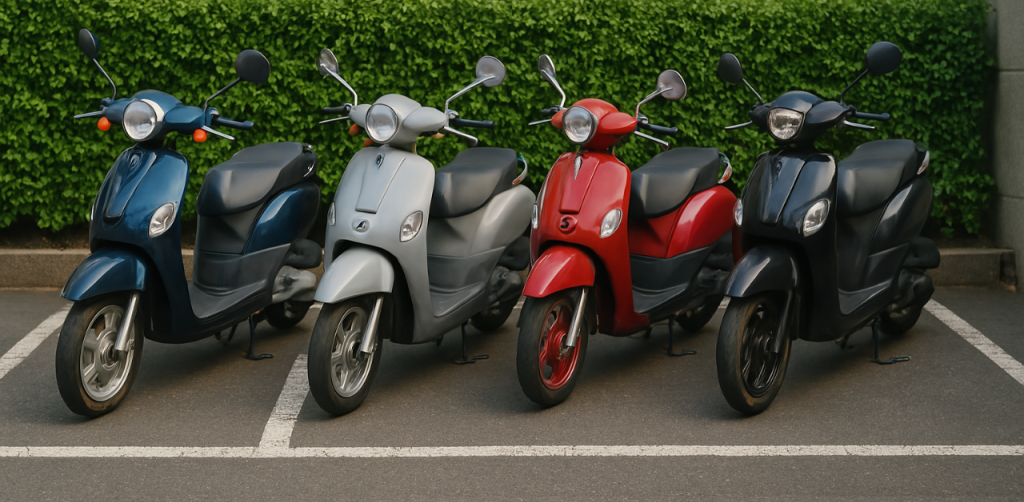
Four scooters of different colors parked in a row in a marked lot with green hedges in the backgroundCounty ordinances give mopeds perks, but they also set limits:
  • Look for stalls designating parking stalls specifically for mopeds or parking motorcycles.
  • In busy districts, a moped may park perpendicular in a parallel parking space if it does not stick out into traffic.
  • Never block sidewalks, driveways, or official traffic control devices.
  • Respect time limits in on‑street parking zones.
  • Some garages now set aside designated parking spaces with a lower daily rate—check posted signs.
Violations can lead to towing and storage fees.

Speed, Noise, and Engine Mods

  • The posted speed limits apply, but the machine may not lawfully exceed 30 mph.
  • Modifying the motor to raise top speed or horsepower is illegal and can lead to a fine.
  • State law bans cut‑out devices that amplify exhaust sound.
Officers use sound meters and visual inspection to enforce these rules.

Penalties and Points

Tickets for moped infractions range from $75 for a first offense to $200 for repeat violations within a year. Riding without a driver’s permit, failing to obey a police officer, or operating while impaired bring steeper fines and possible jail time. Some offenses add points to your driver’s license record, which can raise insurance rates on any operating motor vehicle you own.

After a Moped Crash

  1. Move out of traffic if you can do so safely.
  2. Call 911 and wait for a police officer to file a report.
  3. Exchange information with drivers and witnesses.
  4. Take photos of damage, skid marks, and on‑street parking conditions.
  5. Seek medical care even if you feel okay; hidden injuries are common.
  6. Contact Recovery Law Center. Our lawyer understands moped cases and the insurance rules that apply. Early legal help protects evidence and lets you focus on healing.

Moped Laws Protect You—So Does the Right Legal Help

Hawaii’s moped rules cover far more than wearing a helmet or staying under 30 mph. They touch every part of the ride, from the license plate on the fender to the spot where you park at night. Knowing these details keeps you legal, lowers crash risk, and helps every road user share space.If a careless driver ignored the traffic laws and injured you, reach out to Recovery Law Center. A quick consultation with our Honolulu moped accident lawyer can answer your questions and set a plan in motion. Schedule a consultation to help your case.
Posted in:

Related Posts

Time-Limits-for-Filing-a-Moped-Accident-Claim-in-Hawaii

Moped Safety Tips May Help Keep You Safe

A moped can make it easier to get around Hawaii for work, school, or quick errands. It is affordable, easier to park than a car, and practical for short trips. Still, riding a moped comes with real risks. A rider has less protection than someone inside a vehicle, and even a low-speed crash can lead to serious injuries. That is one reason moped safety tips matter so much. At Recovery Law Center, we bring more than 25 years of personal injury experience to helping injured people in Hawaii, and attorney Glenn Honda has spent years representing those hurt in traffic-related accidents. That background gives us a close view of how quickly a normal ride can change after a driver makes a mistake, encounters poor road conditions, or lacks safety gear. Good habits on the road may help lower your risk. If you have questions after a moped crash, a free consultation can help you understand your next step. Start With the Right Mindset for Safe Moped Riding Safe riding starts before the moped moves. A rider has to treat every trip as a situation that calls for attention, patience, and good judgment. Mopeds are smaller than most other vehicles, which makes them harder for other drivers to see. They also give riders less protection in a crash. That means moped riders should not ride as if they are fully protected by the rules of the road alone. A green light does not always mean a car will stop. A marked lane does not guarantee a driver will stay in it. Safe riding means assuming that traffic can shift fast and staying ready to react. This mindset helps riders avoid common safety hazards before they turn into a moped accident. Wear Protective Gear Every Time You Ride One of the best moped safety tips is also the simplest. Wear the right protective gear on every trip, even for a short ride. A crash close to home can still cause head injuries, road rash, broken bones, or worse. A properly fitted helmet should be the first piece of safety gear you put on. Wearing a helmet helps protect your head in a fall or collision. Eye protection also matters if your moped does not have a shield. Wind, dust, insects, and road debris can affect your vision in seconds. Wearing protective gear also includes clothing that covers your body and improves visibility. Closed-toe shoes, long pants, gloves, and a jacket can reduce injury in a crash. Reflective clothing and bright colors can also make it easier for other drivers to notice you sooner. That extra visibility matters when riding near cars, larger vehicles, and busy streets. Make Visibility a Top Priority on Every Trip Many moped crashes happen because drivers say they did not see the rider. That is why visibility should stay a top priority from the start of the ride to the end. Keep your lights working and use turn signals early. If your turn signals are not clear enough, use hand signals when it is safe to do so. Try to avoid riding in blind spots next to other vehicles. If a driver cannot see you in the mirror, they may move into your space without warning. Visibility also depends on where you position your moped. Ride where you can be seen, not where you disappear between cars. If traffic is heavy, give yourself enough room so other drivers can spot you and react. Safe riding practices are not only about controlling your moped. They are also about helping other vehicles notice that you are there. Control Your Speed and Leave More Space Than You Think You Need Speed affects almost everything on the road. It changes your stopping distance, your balance, and the time you have to respond to hazards. Riding too fast for conditions can turn a small issue into a serious crash. A posted speed limit is only the starting point. Safe riding also means adjusting your speed for traffic, rain, wind, poor pavement, and tight turns. If visibility is reduced or traffic feels unpredictable, slowing down is one of the best riding tips you can follow. Space matters just as much as speed. Leave enough room between your moped and other vehicles, so you have time to brake or steer away from danger. This is especially true near larger vehicles, which may stop slowly, block your view, or drift wider than expected. A little more space can give you the time needed to avoid an accident. Watch for Road Hazards That Hit Mopeds Harder Mopeds are more sensitive to road conditions than larger vehicles. Hazards that feel minor in a car can cause a rider to lose traction or control. Oil slicks, loose gravel, potholes, wet leaves, painted lines, and metal plates can all create a significant risk. Railroad tracks are another common issue. Riders should cross railroad tracks with care and avoid angles that could trap a tire or throw off balance. Weather conditions can also make safe riding harder. Rain reduces traction and may hide slick surfaces. Wind can push a moped across part of a lane. Riders should use extra caution in bad weather and avoid sudden braking or sharp turns. If rain or wind makes the ride unstable, the safer choice may be to wait. Handle Intersections and Lane Changes With Extra Caution Intersections are one of the most dangerous parts of any ride. Cars may turn left in front of a moped, pull out too soon, or stop without warning. Riders should slow down slightly, stay alert, and be ready to brake. Do not assume that having the right of way will protect you. Other drivers may be distracted, rushed, or focused on larger vehicles rather than on a moped or scooter. Watch vehicle movement closely, especially the front wheels, because they often indicate a turn before the driver signals. Lane changes also call for focus and patience. Check mirrors, look over your shoulder, signal clearly, and move only when the lane is fully open. Do not drift between lanes or move too fast into a narrow opening. A clean, controlled lane change is safer than a rushed one. Follow Hawaii Traffic Laws for Mopeds Traffic laws are part of moped safety. Riders need to know the rules that apply to them before they head onto the street. In Hawaii, moped riders must follow the same road rules as drivers, along with moped-specific requirements. State law places limits on moped operation, including where and how a moped may be ridden. Riders generally must stay near the right side of the roadway when practical, except in certain situations such as preparing to turn left or avoiding hazards. Mopeds cannot be used on sidewalks, and riders cannot carry a passenger unless the vehicle falls within a narrow exception under state law. Hawaii law also sets a maximum speed for mopeds. Helmet rules also matter. A rider should know the current Hawaii requirements before getting on the road, especially when using a rented moped. Beyond the law, wearing a helmet remains one of the best ways to reduce the risk of injury in a crash. Check Your Moped Before You Ride A quick check before riding can prevent avoidable problems on the road. It only takes a minute, but it can help you catch issues that affect control or visibility. Make sure your tire pressure is correct. Low tire pressure can affect handling and braking. Check that your brakes work properly and that your lights and turn signals are working. Look at your mirrors and adjust them so you can see clearly behind you. If something feels off, address it before riding. Parking should also be part of your routine. Choose visible and legal parking spots. Use a cable lock or a U-lock to help protect your moped from theft. A stolen or damaged moped can create another safety issue the next time you use it. Ride Defensively Around Cars and Larger Vehicles Defensive riding helps moped riders respond to other drivers' mistakes. It means staying aware of the traffic around you, scanning ahead, and looking for potential hazards before they become immediate threats. Cars may change lanes without noticing a moped. A truck may block your view of traffic ahead. A driver may open a door into your path or brake suddenly in city traffic. Riders should stay alert, maintain a buffer, and avoid putting themselves in tight areas where escape options are limited. This is one area where scooter safety tips and motorcycle safety habits overlap. Small vehicles need room, visibility, and patience. Riders who stay calm and avoid aggressive moves often give themselves a better chance to stay safe. Know What to Do After a Moped Accident Even strong safety habits cannot remove every risk. In a moped accident, health comes first. Get medical care as soon as possible. Some injuries may not show clear symptoms right away, especially head and soft-tissue injuries. Then document the scene if you can do so safely. Take photos, gather contact information, and get insurance details from the people involved. Report the crash as required. Facts matter after an accident, and the details can affect both medical treatment and insurance claims. It is also wise to be cautious about early statements about fault. Moped riders are sometimes blamed too fast, especially when other drivers claim they did not see the rider. The road layout, traffic flow, vehicle movement, and visibility conditions all matter when sorting out what happened. Safer Riding Starts With Better Daily Habits The ideal moped safety tips are the ones riders actually use every day. Wear the right gear, stay visible, respect traffic laws, slow down for hazards, and leave enough space to react when traffic shifts. Those habits may not remove every risk, but they can put you in a better position to avoid a crash and reduce harm if one happens. At Recovery Law Center, we help injured moped riders across Hawaii understand their rights and their options. If you were hurt in a moped crash, contact us for a free consultation.

Pink vintage scooter parked beside a pale green wall under a window, adding a colorful urban street detail

Honolulu’s Most Dangerous Areas For Mopeds and Scooters

One wrong turn in Honolulu can put a scooter or moped rider in the middle of fast-moving traffic, a crowded crosswalk, and a driver who never looks twice. That is part of what makes riding in town so risky. Honolulu has narrow in-town corridors, tourist-heavy streets, short signal cycles, and constant turning traffic. For riders, those conditions can turn a normal trip into a crash scene in seconds. This article breaks down Honolulu's most dangerous areas for mopeds and scooters, why these spots create more risk, and what riders should know to stay safer on Oahu. Where Honolulu Puts Riders in the Tightest Squeeze The phrase Honolulu's most dangerous areas for mopeds and scooters usually points to the same type of place: multi-lane streets with heavy traffic, turning cars, timed traffic signals, and many people crossing on foot. That is why in-town Honolulu carries more risk than a quiet residential street. Downtown Honolulu is a good example. Riders deal with office traffic, buses, delivery vans, parked cars pulling out, and people crossing between corners. Streets can look slow, but that does not make them safe. A scooter rider can still get clipped by a driver turning across a lane or opening a door into the rider’s path. Waikiki brings a different set of problems. Many tourists drive rental cars, miss street signs, stop suddenly, or swing across lanes near hotels and beach access points. Add pedestrians, bicycles, rideshare drop-offs, and night traffic, and a small vehicle becomes easy to miss. Kapiolani and Ala Moana corridors also deserve close attention. These roads carry heavy traffic, have wide lanes, and feature frequent turning movements. That mix can be extremely dangerous for riders because a car driver may look for another car rather than a low-profile moped. That is how car accidents happen, even in broad daylight. The Intersections That Keep Demanding Extra Caution A prior Recovery Law Center review, citing Hawaii DOT intersection crash data, identified several Oahu intersections that stand out in broader collision patterns. The data was not limited to mopeds, but it still helps show where riders should slow down, create space, and stay alert. Beretania Street and Ward Avenue Piikoi Street and Kinau Street Beretania Street and Piikoi Street King Street and Isenberg Street Kapiolani Boulevard and Keeaumoku Street Waialae Avenue and 16th Avenue School Street, Iolani Avenue, Queen Emma Street, and Lusitana Street area These are not risky by chance. They share the same trouble spots: short reaction time, several turning lanes, lane changes near a light, and drivers trying to beat a signal. Hawaii’s red-light safety program notes that from 2015 through 2020, there were 1,879 statewide crashes tied to red-light and other signal violations. At a busy urban corner, that matters even more for riders with little protection. Take Waialae Avenue and nearby in-town routes. These streets often combine neighborhood access, schools, parked cars, and turning traffic. A rider may do everything right and still face a driver who cuts across too soon. The same pattern shows up around Piikoi, Beretania, and Keeaumoku, where drivers are often focused on beating congestion rather than scanning long enough to spot a scooter. Waikiki, Ala Moana, and Night Riding Change the Risk Some of Honolulu’s most dangerous intersections are risky all day. Others become worse at certain times. Waikiki and Ala Moana are good examples because traffic shifts fast from daytime shopping and beach activity to crowded evening travel. At night, riders lose another safety margin. Hawaii requires a moving moped to display a headlamp and tail lamp from 30 minutes after sunset until 30 minutes before sunrise, and when light conditions are poor. That rule exists for a reason. In the dark, small vehicles blend into the road, especially near hotel loading zones, palm-lined streets, and glare from signs or headlights. Recent Honolulu Police Department reports also show serious collisions near well-known Honolulu corridors, including Kalakaua Avenue and Kapahulu Avenue in Waikiki. Those reports involved pedestrians, not mopeds, but they still show where conflict between vehicles and vulnerable road users remains high. Ala Moana adds another problem: speed. Even when posted speed limits are low, the road can feel wide and open, leading some drivers to exceed the speed limits that conditions support. For a rider, that makes a simple merge, lane shift, or braking move much harder. Why Mopeds and Scooters Get Missed So Often in Honolulu Traffic Honolulu crashes involving scooters and mopeds often start with visibility. Riders are smaller, quieter, and easier to miss in mirrors. On a busy street, a driver may check for trucks and cars but fail to register a scooter moving beside them. Blind spots are a major part of the problem. A rider near the right rear quarter of a car can disappear from view just as the driver turns or changes lanes. The risk grows near buses, delivery vans, and SUVs. Add potholes, slick pavement, uneven utility covers, or a rushed stop at a light, and a rider may have no room to avoid impact. Tourist traffic makes this harder. Many visitors are unfamiliar with Honolulu streets, one-way patterns, and curbside loading zones. Locals know that traffic can stop near a hotel entrance or back up near Ala Moana and Waikiki with little warning. Visitors may not. That split-second confusion can lead to sudden braking or a missed signal. The Hawaii Rules That Matter Most Before You Ride a Moped Some crashes are caused by careless drivers. Others get worse because the rider did not know the traffic laws that apply in Hawaii. A few rules matter more than most. First, mopeds may not be driven on freeways. Hawaii DOT says freeway entrances are posted against vehicles with less than five horsepower, and the minimum freeway speed is 45 mph. A moped also may not be driven faster than 35 mph. Second, Honolulu’s transportation guidance states that mopeds must use bike lanes and paths when available, unless signs prohibit their use. That surprises many riders, especially visitors renting for the day. Third, riders should not treat sidewalks as an easy escape from traffic. In busy business districts and pedestrian-heavy parts of town, that creates obvious danger for walkers and can draw enforcement attention. The safer approach is to ride where the law allows, obey signs and lights, and avoid squeezing past cars at the last second. Helmets also matter, even when a rider is focused on legal fault and insurance. A helmet will not prevent every head injury, but it can reduce the severity of injuries in a crash. How Riders Can Reduce Risk in Honolulu Without Giving Up Convenience Riding in Honolulu can still be practical and fun. It just takes a different mindset from driving a car. A scooter rider has to think one step ahead on every block. The safest approach is simple: Create space from turning cars, buses, and parked vehicles Slow down near hotel entrances, crosswalks, and any lights about to change Avoid riding beside a car through an intersection if you can fall behind or move ahead safely Use lights at night, wear a helmet, and assume a driver may not see you Those habits do not remove every risk. Still, they improve safety and lower the chance of getting trapped by another driver’s mistake. When a Honolulu Crash Raises More Than a Traffic Question A moped or scooter crash is not just about the street where it happened. It becomes a question of fault, roadway conditions, vehicle visibility, insurance coverage, and the steps taken right after impact. In a city like Honolulu, where riders share the road with fast-moving traffic, pedestrians, visitors, buses, and dense urban streets, small mistakes can lead to serious injuries. At Recovery Law Center, we help injured riders and passengers across Hawaii understand what happened and what comes next. If you were hurt in a moped or scooter crash, contact us for a free consultation. Visit our Moped Accident Lawyer Office in Honolulu, HI Moped Accident Lawyer Office in Waipahu, HI

Are Mopeds Allowed in Bike Lanes in Hawaii

Are Mopeds Allowed in Bike Lanes in Hawaii?

According to the Hawaii Department of Transportation, two-wheeled mopeds are generally required to use bicycle lanes when provided, but bicycle paths can be restricted or banned by signs, and the rule does not apply the same way to three-wheeled mopeds. Hawaii law also bars mopeds from sidewalks and areas meant only for pedestrians. In this article, you will get a clear explanation of how Hawaii law treats mopeds in bike lanes, when bicycle paths are off-limits, and what these rules can mean after an accident. Why Hawaii Treats Bicycle Lanes and Bicycle Paths Differently Under HRS § 291C-197, a moped driver shall use bicycle lanes when bicycle lanes are provided on the roadway. That is the general rule in Hawaii for bike lanes on roadways. But the same statute also says the State and counties may restrict or prohibit moped use on bicycle paths under their control, as long as signs clearly show that restriction. That means a rider can be perfectly legal in a striped bicycle lane beside traffic, then become illegal by entering a physically separated bicycle path with posted signs. Hawaii DOT’s current moped guidance adds another layer. It explains that many bicycle paths were built with federal funds and that, because the federal government treats mopeds as motor vehicles, mopeds are not allowed on them. Riders are told to check the signs before entering. What Counts as a Moped Under Hawaii Law A lot of confusion starts with the machine itself. In Hawaii, a moped is not just any small scooter. Hawaii DOT explains that a moped may have two or three wheels, can usually carry only one person, must have no more than two horsepower, must have a top speed of no more than 30 mph on a level surface, and must have an automatic transmission. If it exceeds 30 mph, it is no longer a moped. It becomes a motor scooter, and different licensing and insurance rules can apply. That distinction matters in bike lanes. Hawaii DOT states that motorcycles may not use bicycle lanes because they are not defined as bicycles for those purposes. The same logic helps explain why a rider should not assume every small motorized vehicle belongs in a bicycle lane. A true moped gets specific treatment under the statute. A motorcycle does not. When the Rule Changes for Three-Wheeled Mopeds Here is the part many articles leave out. HRS § 291C-197 does not apply to a three-wheeled moped. The official Hawaii DOT moped guide quotes that exception directly. That does not mean a three-wheeled moped can go anywhere it wants. It means the rule that tells moped riders to use bicycle lanes on the roadway is not written to apply to that type of vehicle. A three-wheeled moped also has separate rules on passengers and insurance. Hawaii DOT notes that side-by-side three-wheeled mopeds may carry two people, and three-wheeled mopeds must carry liability and property damage insurance. Where Moped Riders Can Get Into Trouble Fast The bike lane rule is only one part of the bigger traffic picture. Hawaii law also says moped riders cannot drive on a sidewalk or any area meant for the exclusive use of pedestrians. Riders also must travel single file on the roadway. If they are moving slower than the normal speed of traffic in the same direction, they must ride as close to the right side of the roadway as practicable, except when preparing for a left turn, passing, or avoiding hazards. That matters after a crash because fault often turns on small details. Was the rider in the correct lane? Was the moped in a bicycle path with signs that prohibited motorized vehicles? Did a car cross over the bike lane for on-street parking or a turn without yielding? Did the moped rider leave the lane without signaling or move against traffic moving in the same direction? These facts shape how a police officer, insurer, or jury may view the case. A rider should also remember that mopeds cannot be used on freeways. Hawaii DOT explains that freeway entrances are posted against vehicles with less than five horsepower, and the minimum speed on freeways is 45 mph. Since a legal moped is capped at 30 mph, it does not belong there. Licensing, Helmets, and Other Rules That Matter After a Crash Hawaii requires a valid driver’s license to drive a moped. Hawaii DOT states that a person can drive a moped with any class license, and a Class 1 license is available for someone who wants to drive only mopeds. That license requires both a knowledge and a practical test. Riders must also register the moped, and the registration plate must be affixed to the rear fender, facing rearward. Helmet rules also matter. The official Hawaii DOT moped guide quotes the statute stating that no person shall drive a moped unless the person wears a safety helmet securely fastened with a chin strap. The same guide notes separately that helmets are highly recommended and that a full-face helmet provides the most protection. Those points can become important in injury cases. Even when another driver caused the accident, insurers often look for a way to argue that the rider violated traffic laws, failed to wear safety equipment, or operated a vehicle that did not meet the legal definition of a moped. What This Rule Can Mean in a Hawaii Injury Claim Bike lane crashes in Hawaii are rarely about a single statute. They often involve a mix of lane use, visibility, right-of-way, speed, and driver attention. A driver may say the moped “should not have been there,” even when Hawaii law required that the moped use the bicycle lane. On the other hand, a rider may assume any bike path is fair game, then learn that signs prohibit mopeds on that route. That is why the legal answer matters beyond traffic court. It can affect who pays for medical care, lost income, bike or moped repairs, and other damages caused by the accident. If the crash involved a rented moped, additional issues may arise. Hawaii DOT states that privately owned mopeds do not require insurance, but rented or leased mopeds must be insured against bodily injury, death, and property damage claims. Get a Free Consultation About Your Moped Accident Claim Lane rules can seem minor until a crash, citation, or insurance dispute puts them under a microscope. In moped cases, small details often carry real weight, including where the rider was traveling, what the posted signs said, and how other vehicles moved around that lane. A clear understanding of those facts can make a big difference when fault is disputed. If you were injured in a moped accident, bicycle lane collision, or roadway crash in Hawaii, we can help you sort through the facts and understand your legal options. Contact us for a free consultation.